Building with laterite
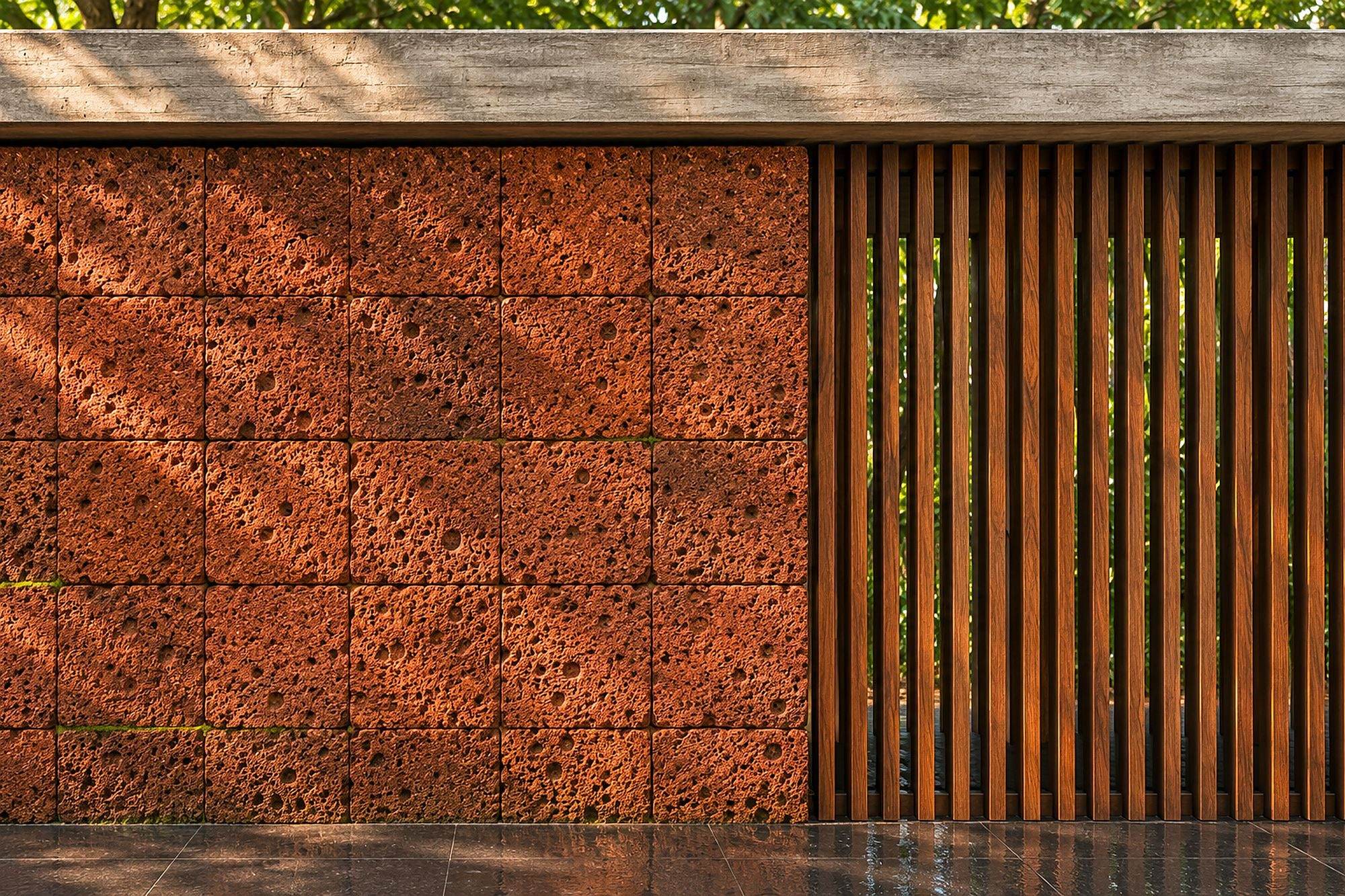
Laterite is the red stone of the Konkan coast. It is soft when it comes out of the ground and hardens in the air, which is why it can be cut by hand and why it lasts for centuries once it is laid.
The blocks for the houses come from a quarry eleven kilometres inland. Each is cut to 25 centimetres and laid with a thin bed of lime, never cement. The pits in its face hold water after rain and dry within the hour.
One wall, not four
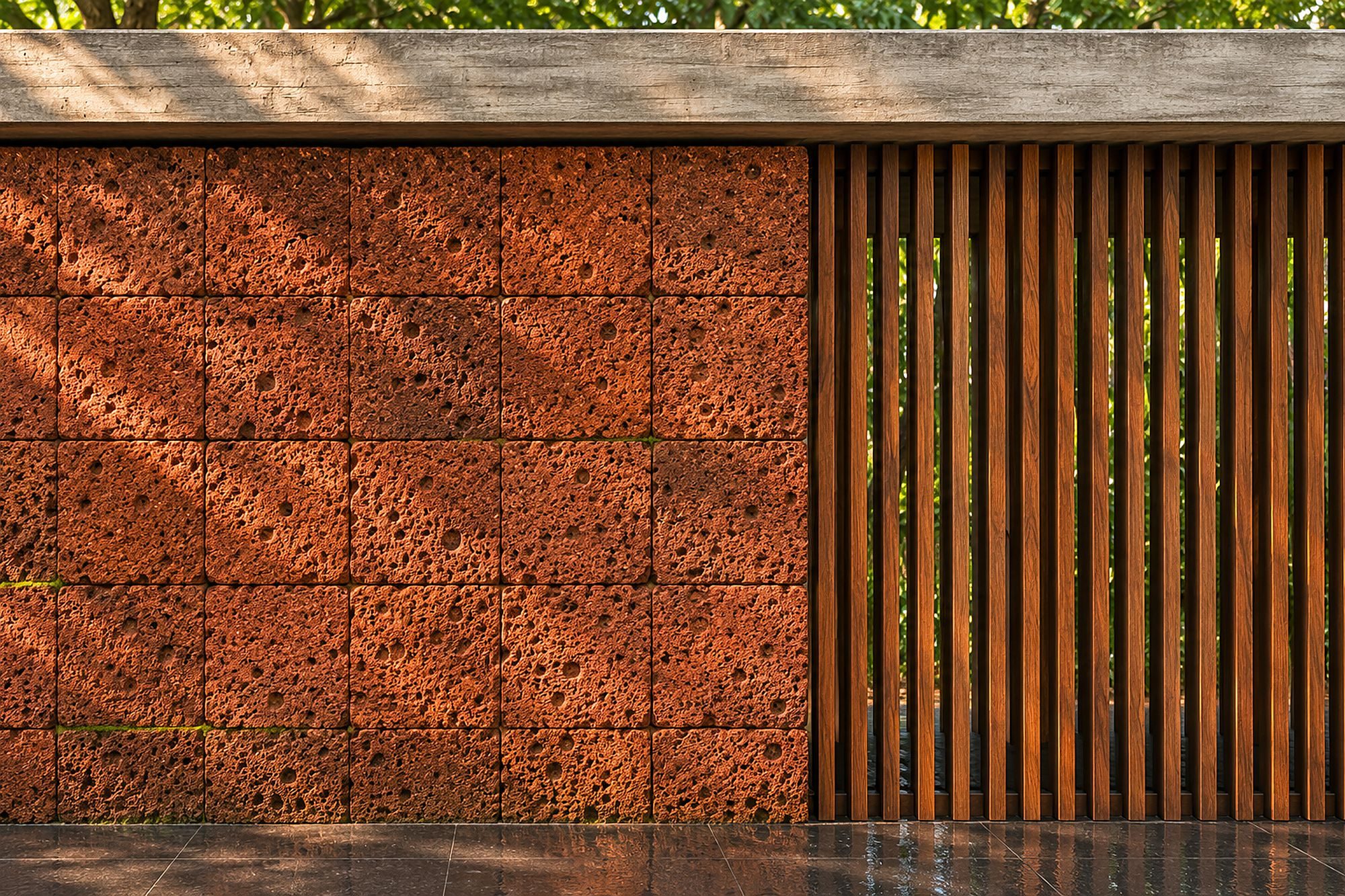
Each house is built along a single laterite wall that faces the land. The wall carries the roof, keeps the afternoon sun off the rooms, and hides everything a house needs and nobody wants to see: the store, the water tank, the plant room.
The other side, the side that faces the sea, is glass that slides away completely. There is nothing in between.
Why not paint it
Laterite is the colour of the ground it came from. Painting it would mean painting it again every two monsoons. Left alone, it darkens a little in the first year and then stays the same.
The same rule applies to everything else in the houses. The concrete keeps the grain of the boards it was cast against. The teak is oiled once and then left to go silver. Nothing is painted.